

Ellen Meehan was born in 1838 to parents John Meehan and Margaret Shanahan
1838–1889, Ellen Meehan – this is note from Jerry Smith (my cousin) who has done most of the document research for the Meehan line and kindly allowed me to copy. “I have not discovered any documents which identify the parents of Ellen Meehan. I have placed her as a daughter of John Meehan and Margaret Shanahan. She could however, be the daughter of Timothy Meehan and Bridget Shanahan. John and Timothy were brothers and lived in the same house. There are however, three pieces of information which help limit the scope of possibilities.
- I am a DNA match (4th – 6th cousin) with Ronald Brown. He is the son of Arthur Brown and Berthe Aurora Bergoron. This clearly places me in the family chain of James Burns and Ellen Meehan.
- Maria (Mary) Burns (The daughter of James Burns and Ellen Meehan) has two sponsors. One of these is Margaret Meehan. John Meehan and Margaret Shanahan had a daughter Margaret Meehan and I suspect she is the named sponsor. Sponsors were typically family.
- The marriage record for James and Ellen and for their daughter both indicate they were from the Rockhill & Bruree Parish. This is consistent with the rest of my maternal Meehan relatives.
Ellen Meehan married James Burns in Rockhill/Bruree on September 22, 1855. The witnesses were James Hannan and Mary Ann Leahy.

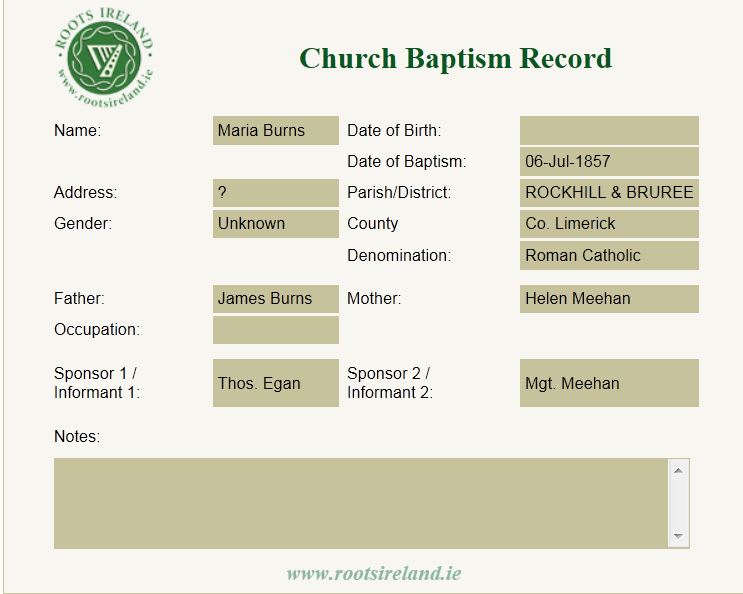
On July 6, 1857 their first child was baptised Maria (Mary) Burns in Bruree Church. The sponsors were Thomas Egan and Margaret Meehan.
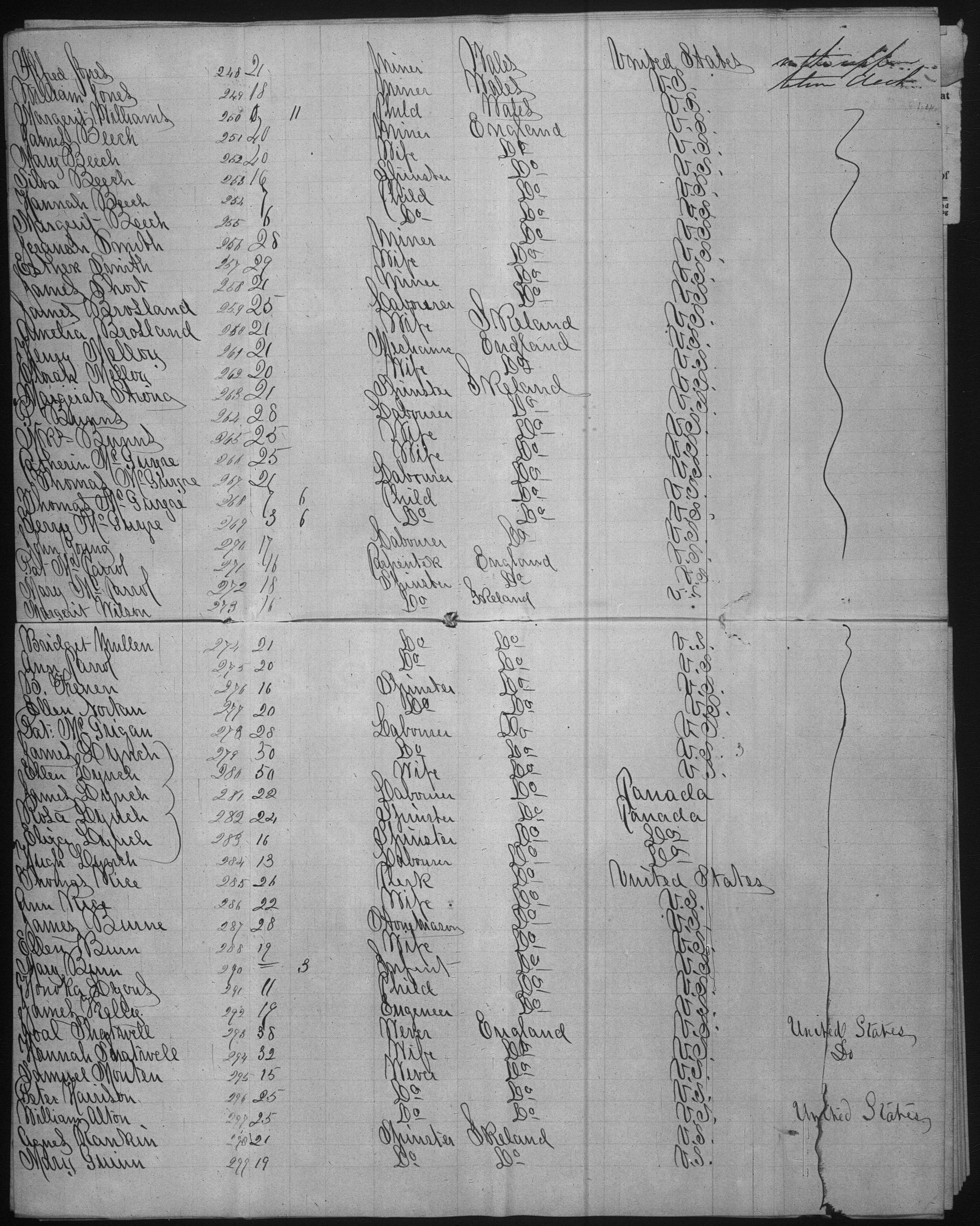
On September 15th, 1857, James Burns, a 28-year-old stonemason, arrived at the bustling Port of New York from Liverpool aboard the ship Middlesex. Before embarking on the transatlantic journey, he and his young family—his 19-year-old wife, Ellen, and their three-month-old daughter, Mary—likely traveled by steamer from Cork or Cobh, a common route for Irish emigrants at the time.
The journey would have been long and arduous, especially for Ellen, caring for an infant in the cramped and unsanitary conditions of a 19th-century passenger ship. Steerage class, where most working-class emigrants traveled, was overcrowded, with rows of wooden bunks stacked in the dimly lit hold of the ship. The air was thick with the scent of seawater, unwashed bodies, and the ever-present fear of illness. Seasickness, hunger, and exhaustion were constant companions.
Yet, amid the discomfort and uncertainty, there was hope. Like countless others fleeing economic hardship, famine, or political unrest, James and Ellen must have clung to the promise of a new life in America. As the Middlesex neared the shores of New York, they would have joined their fellow passengers on deck, straining for their first glimpse of the land that held their future.
On August 15th, 1850, the U.S. Census recorded James Burns and his family living in the town of Jay, Essex County, New York. James, now 32 years old, was listed as a miller—likely working long hours in a local grain or sawmill, his days filled with the steady rhythm of grinding stone and the scent of fresh-cut wood or grain dust. His personal estate was valued at just $50, a modest sum compared to his neighbors, suggesting that while he had found work, prosperity was still a distant dream.
Ellen, now 22, was balancing the relentless demands of motherhood and household duties in their simple home. Their two children, Mary, aged two, and John, just one year old, represented the family’s transition—Mary had been born in Ireland, while John was their first child born on American soil. This alone would have marked a turning point, a physical embodiment of their new life in a foreign land. The nearest post office was in Ausable Forks, a reminder that though they were carving out a life in this rural frontier, the wider world was still within reach—letters from home, news of friends who had also emigrated, and the ever-present connection to the Ireland they had left behind..

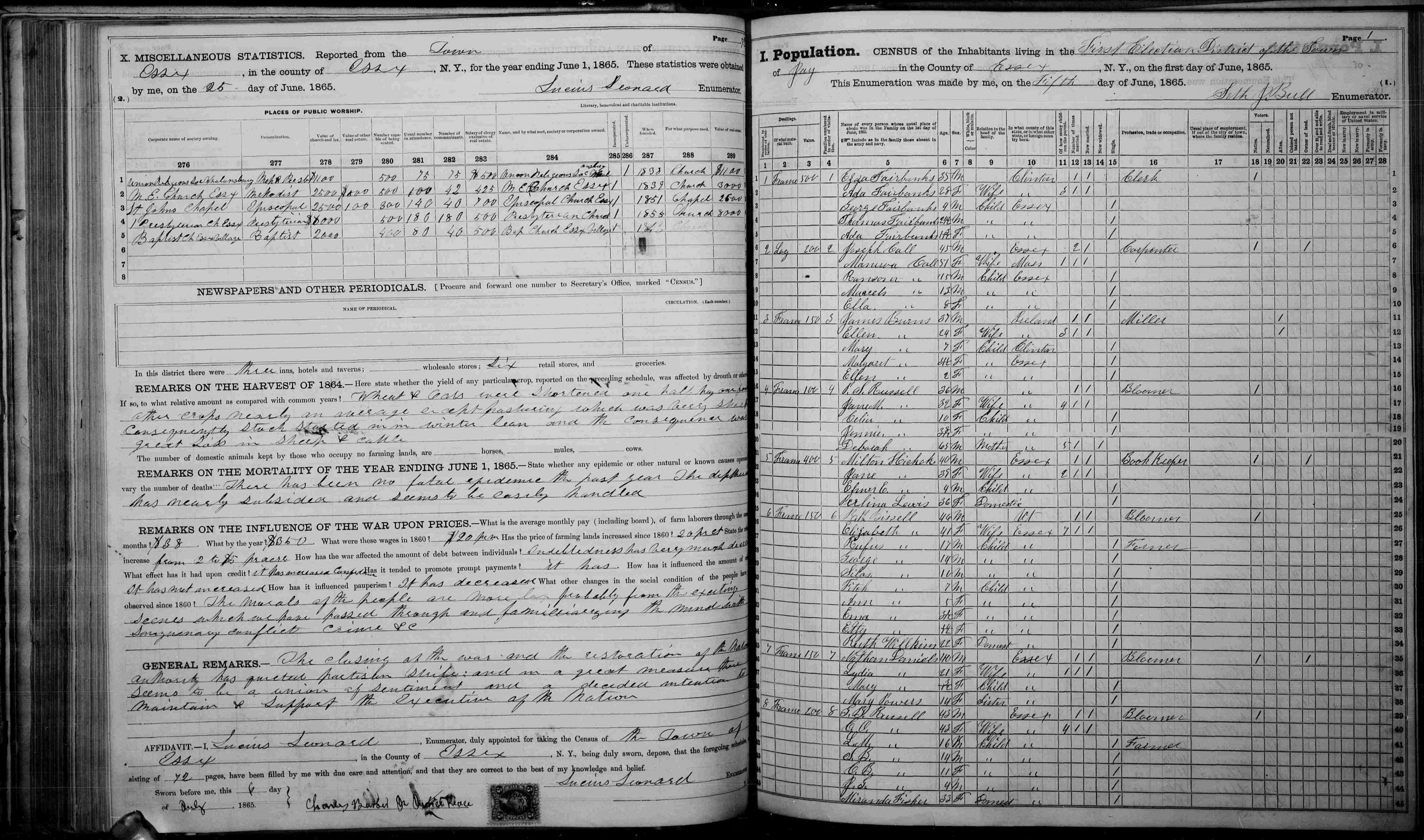
By the time of the 1865 Census, some details had shifted—whether due to clerical errors or evolving family narratives. The record now stated that Mary was born in Clinton, New York, contradicting the 1860 Census, which had listed her birthplace as Ireland. This raises questions—was the earlier record mistaken?
Another noticeable change was the absence of John, who would have been six years old. No record explained his disappearance, leaving only speculation—had he succumbed to illness, a tragically common fate for young children in the 19th century, or was he simply missing from the record?
The family, however, had grown. Margaret, at three and a half, and Ellen, at just two, were new additions. The household had changed yet again, shaped by both the quiet joys of new life and the silent absence of a child once counted among them.
By the time of the 1870 Census, taken on August 3rd, the family had relocated 40 miles south from the town of Jay to Moriah, New York—a move that likely reflected a search for better opportunities.
Still, there was no record of baby John, who would have been around 11 years old by now. His absence across multiple censuses suggests the heartbreaking reality that he may have passed away in early childhood, though no official record confirms it.
On a more positive note, James’ personal estate had doubled in value, now listed at $100. While still modest, this increase indicated that life was improving. Perhaps work had been steadier, or he had been able to save a little more over the years—small but meaningful signs of progress in the family’s journey

In the 1880 census taken on June 12th, James aged 52 works at tending a grist mill. In the USA in 1880, a grist mill was an essential facility where grains, primarily wheat and corn, were ground into flour and meal. These mills, typically located near water sources, harnessed water power through a water wheel to turn heavy millstones. Grist mills played a crucial role in the agricultural economy by allowing farmers to process their crops locally, thereby providing a vital link between farm production and market consumption. The flour and meal produced were staple ingredients for bread and other foods, making grist mills central to daily life and community sustainability during this period. I wonder if James had worked in the mill in Bruree and put stone mason on his ship’s passenger manifest because he thought it would make entry to the US easier?
Daughter Mary is teaching school at the age of 21. Margaret 17 and Ellen 15 are at home. There are two new additions to the family – Theresa aged 5 and Frances aged 1 year.


Ellen Meehan Burns died, at the age of 48, on January 3, 1889 and James died aged 60 on April 18, 1898. They are both buried at Saint Patrick Cemetery Moriah, Essex County, New York, USA
1879 – Frances Lillian Burns was born. She married Gustave Schurr and had two children: George who was born on February 1, 1915, and Edwin, born on September 21, 1917. Frances Lillian died on October 8, 1959 aged 80 and is buried at Oakdale Cemetery, DeLand, Volusia County, Florida, USA
On Edwin’s death certificate it says the direct cause of death on August 6, 1930 at the age of 12, was epilepsy and contributing factor was polio.

George died on November 17, 1988, at the age of 73. He is buried at Jacksonville Memory Gardens , Orange Park, Clay County, Florida, USA