
A Love Divided: The Story of Anthony Collins and Barbara Moore
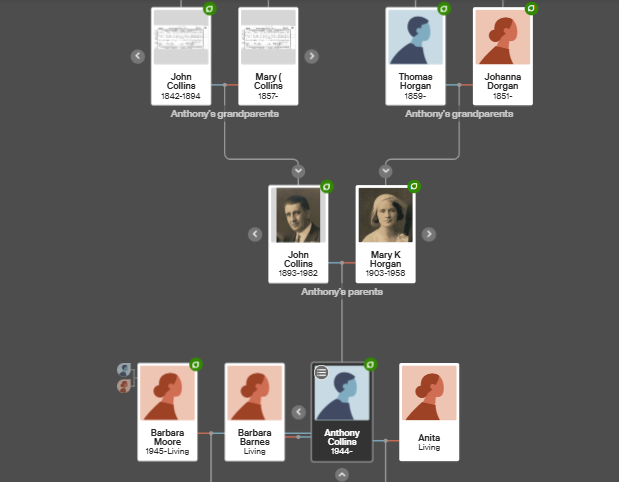
In 1944, during the final stretch of World War II, Anthony Collins was born in New York City to Irish immigrants John Collins and Mary Katherine Horgan. New York, a city of endless movement and reinvention, had long been a haven for Irish families seeking a new life. Yet for many, including the Collins family, life was shaped not just by hope but by hardship. When Anthony was only 11 years old, tragedy struck — his mother Mary passed away, leaving a deep absence in the family. Losing a parent at such a young age must have left its quiet mark, but like many of his generation, Anthony learned to carry grief.
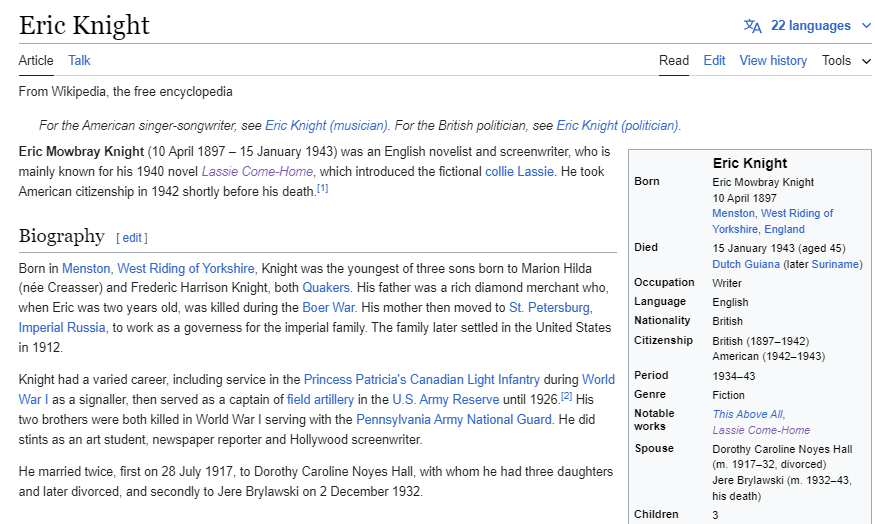
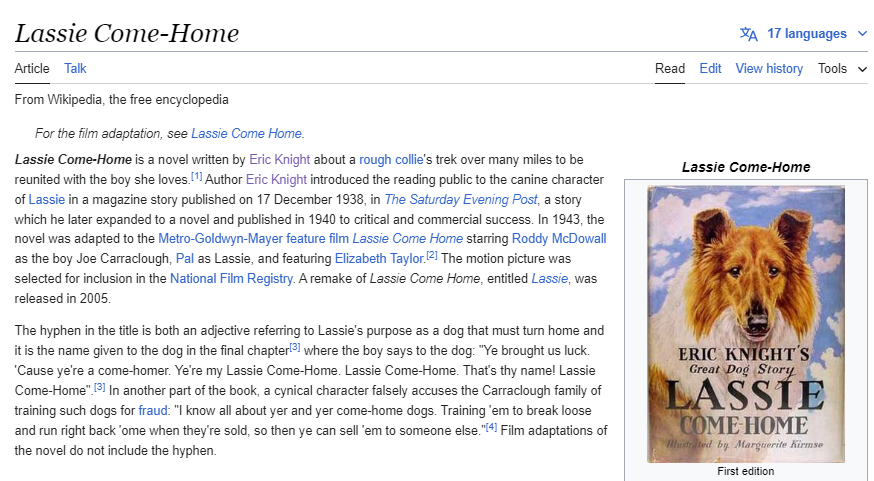
As he grew, so did his dreams. And in the early 1960s, Anthony met a young woman whose own roots were laced with literary history — Barbara Moore, granddaughter of Eric Mowbray Knight, the author of Lassie Come-Home. Their connection blossomed quickly, and like many young lovers before them, they envisioned a life together.
But real life, unlike storybooks, is rarely straightforward.
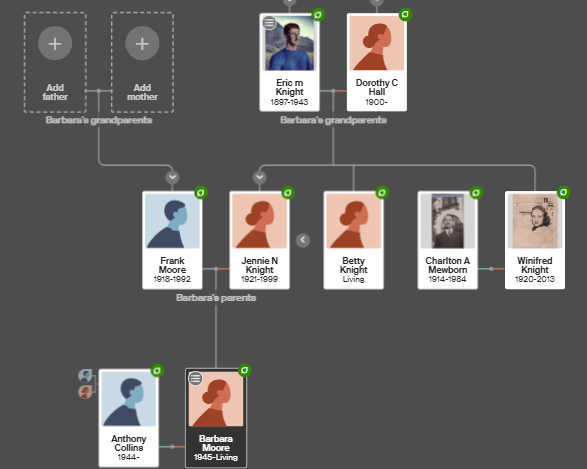
Barbara, pregnant with their daughter and deeply committed to Anthony, encountered unexpected resistance. For reasons now long forgotten, Anthony’s father disapproved of the match and forbade the relationship. Whether it was due to cultural expectations, generational ideals, or personal conviction, the result was the same: a young couple torn apart. Barbara gave birth to their daughter, Elizabeth, in 1964 in Queens, navigating single motherhood with courage and the support of her mother.
Time moved on. Barbara eventually found love again with a wonderful man, who embraced Elizabeth as his own daughter and helped raise her in a loving, stable home. Anthony, too, continued on his path, later marrying Barbara Barnes and building a new life.
For decades, the story of Barbara and Anthony remained hidden — known only to a few and never spoken about. But stories have a way of surfacing when they’re ready.
On March 6, 2018, as fate would have it, I was visiting my son in New York when an unexpected email arrived in my inbox. It was from Elizabeth, who had recently taken a DNA test and was looking for medical and family history. The timing was uncanny. I immediately reached out, and soon after, I took a day trip to Washington D.C. to meet her and her husband in person. It felt like a rediscovered branch of our family tree had just stretched across the Atlantic.
By then, I had already traced the rest of our American cousins — Anthony’s children from his later marriage. Their family business wasn’t far from where I was staying in New York, and one morning, curiosity led me to their office. The cab dropped me off in a quiet laneway. A modest sign read “Collins,” and I hesitated. But I rang the bell anyway.
The reception I received was polite but reserved — understandable, perhaps, given the sudden appearance of a stranger claiming kinship. I sensed it wasn’t the right moment to mention Elizabeth, so I held that part of the story back. Still, I learned that their younger brother, John, had a deep interest in family history. Not long after, John himself reached out to me. We exchanged emails, and in time, I told him about Elizabeth — his half-sister.
To his credit, John was delighted. The idea of discovering a sister he’d never known lit a spark of excitement in him, and I was heartened to see the beginning of a bond forming between them. They exchanged messages and photos, and for a time, it seemed another family reconnection was taking root.
But family history, like family itself, is rarely neat. While John embraced the discovery, it seemed others in the family were less open. Old wounds, unanswered questions, and the passage of time can create distances not easily bridged.
Interestingly, years before my own visit to New York, at a time when I had no interest whatsoever in my family history, some of Anthon’s siblings, and other descendants of John Collins had traveled to Ireland to trace their roots. One afternoon, as my father was sitting down with his usual glass of whiskey after visiting my mother in the nursing home, there came a knock at the door. It wasn’t the first time Americans had come looking for long-lost cousins — we had the local post office in Granagh, so we were often the first stop for hopeful genealogists. This time, to his amazement, they were looking for him. Someone in Adare had pointed them in the right direction.
They all shared a Jameson, and a few nights later gathered for dinner at my brother’s home. That evening, the past felt closer — not a relic, but a living connection and many stories where shared.
As for Anthony, we may never know what led him to distance himself from Barbara and Elizabeth as a grown man outside of his father’s control. Life’s decisions are rarely simple, and the heart often holds more than it reveals.
What we do know is that love, loss, and longing travel through generations. And sometimes, even after decades of silence, voices can still find their way back to each other.