
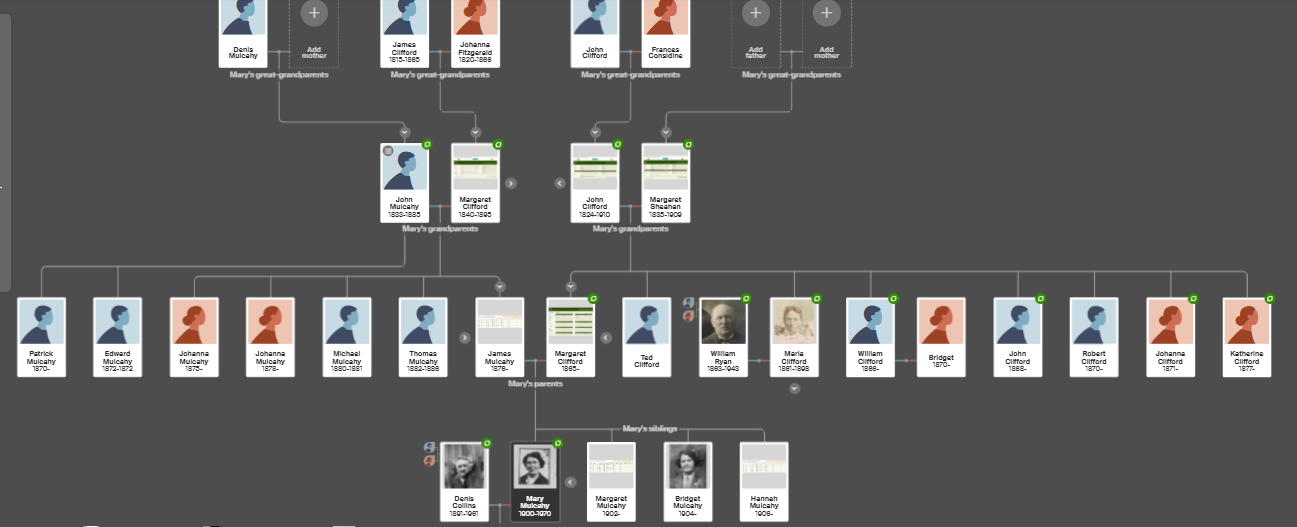
Margaret Clifford’s parents were John Clifford & Margaret Sheahan
James Mulcahy’s parents were John Mulcahy & Margaret Clifford
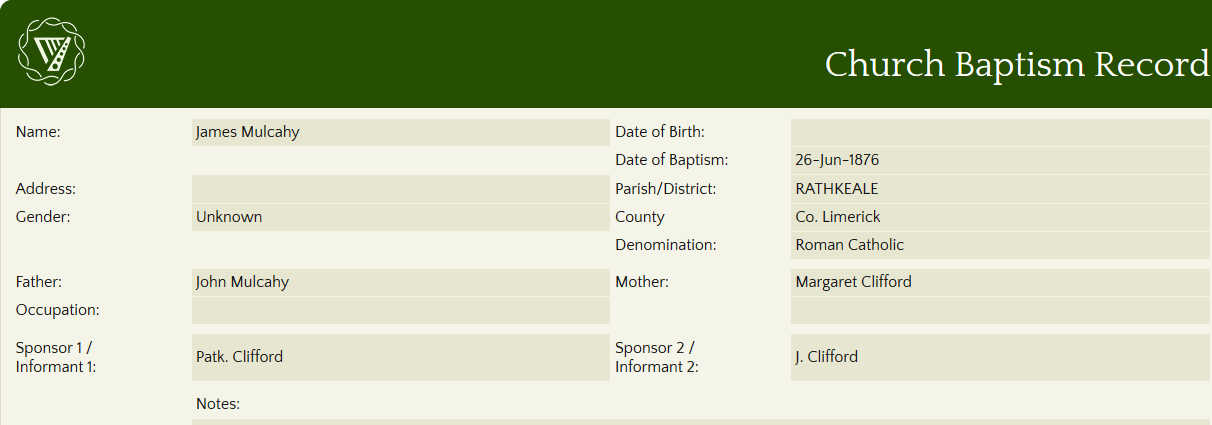
James Mulcahy was baptized on 26 June 1876, the sponsors were Patrick Clifford and J Clifford
On April 29, 1899, James Mulcahy, aged 23, married Margaret Clifford, a 34-year-old woman from Kilmihil, County Limerick. The marriage was witnessed by John Egan and Catherine Clifford, younger sister of the bride. The significant age gap between James and Margaret was not entirely unusual for the time, especially in rural Ireland, where marriages were often shaped by practical concerns—land, inheritance, and the preservation of family holdings took precedence over romance.

Children of James Mulcahy and Margaret Clifford (Kilmihil):
The couple lived in Ballyallinan South, a rural townland near Kilmeedy in County Limerick, where land was a precious resource and farming was the dominant way of life. The surrounding area, still reeling from the aftershocks of the Great Famine (1845–1852), was slowly rebuilding its population and economy. Tenant farmers were gradually gaining greater security under the Land Acts, which allowed many to purchase the lands they once rented, though often with difficulty and debt.
Together, James and Margaret raised four daughters:
- Mary Mulcahy born 1900 in Ballyallinan and died 1970 aged 70 in Ballinruane, Kilmeedy. She married Denis Collins, Ballinruane
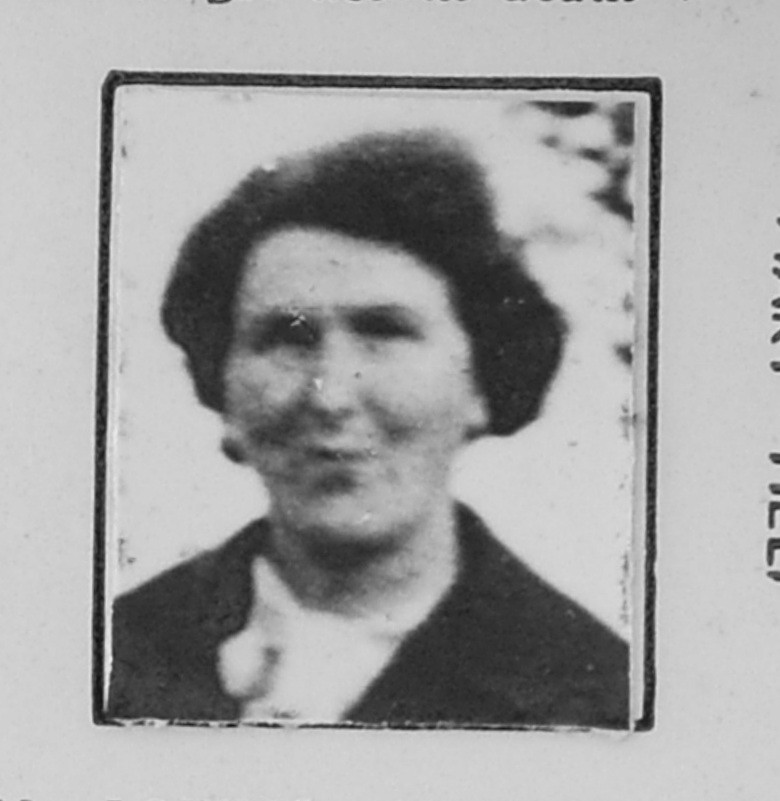
- Margaret Mulcahy born 1902 was known as Peg. Never married
- Bridget Mulcahy born 1904 was known as “Birdie” and never married
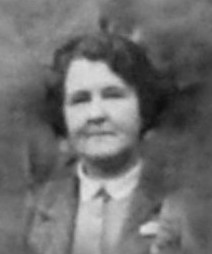
- Hannah Mulcahy, born in 1906 and known as Han, eventually emigrated to Scotland, part of a broader wave of Irish emigration driven by poverty, limited opportunities, and the lure of work abroad—especially in the wake of Ireland’s stagnating rural economy.
In the 1901 census, the Mulcahys are listed as farmers in Ballyallinan South. Living with them was Katie Noonan, a 13-year-old domestic servant who could read and write—a notable skill. The National School system, introduced in the 1830s, had improved education across Ireland by the end of the century, but it remained uneven, especially for girls and the rural poor.
Curiously, there was no Noonan family listed in the area, raising questions about where Katie came from and where she went after. She may have been a distant relative, an orphan or simply a working girl from a neighboring parish. Nearby houses had their own young servants: a 10-year-old boy, a 12-year-old girl, and, in another case, an 80-year-old servant still listed as part of a household—reflecting how every able body, regardless of age, contributed to the survival of the home.
The Mulcahy house was considered second-class by census standards—substantial, well-built, and likely comfortable by rural standards. It was constructed of stone walls and a tiled roof, with five rooms and three windows at the front, which looked out over the farmyard. Inside, a large central table and an open fireplace would have formed the heart of the home, complete with a bellows wheel to stoke the fire—common in larger farmhouses before the widespread use of enclosed ranges. The vaulted ceiling on the ground floor, an architectural feature that added both space and ventilation, would have made it feel both grand and practical.
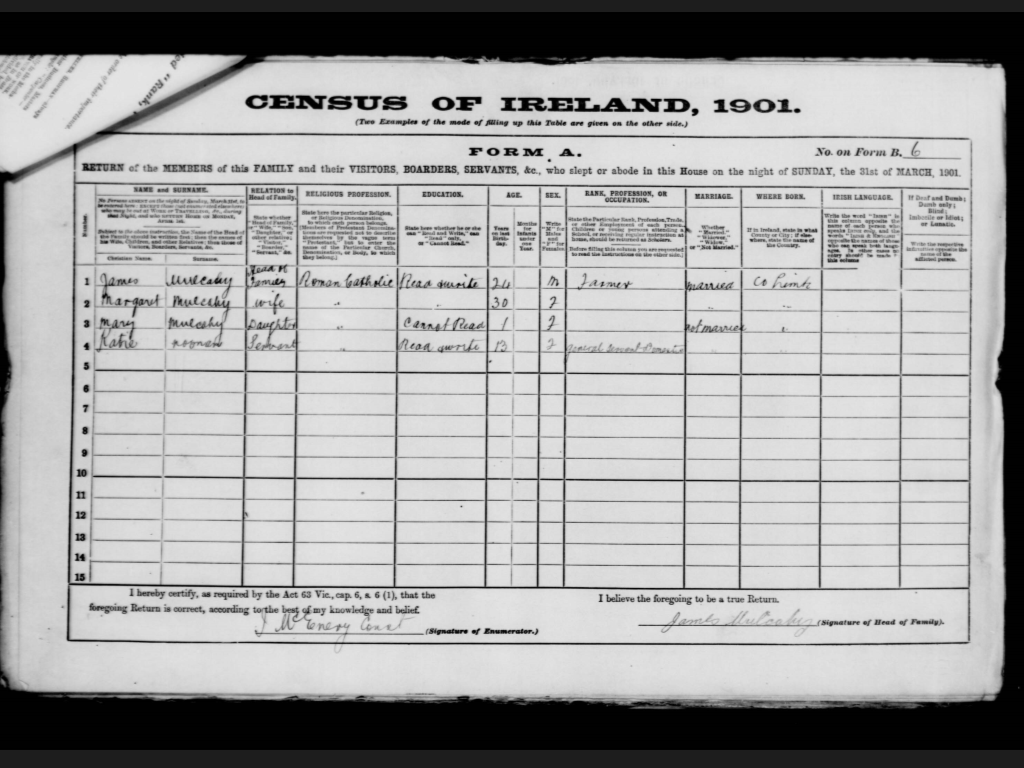
By the 1911 census, the family remained in House 1, Ballyallinan South, but Katie Noonan was no longer with them. Whether she moved on to another household, emigrated, or married is unknown—like so many girls of her time, her trace is faint.
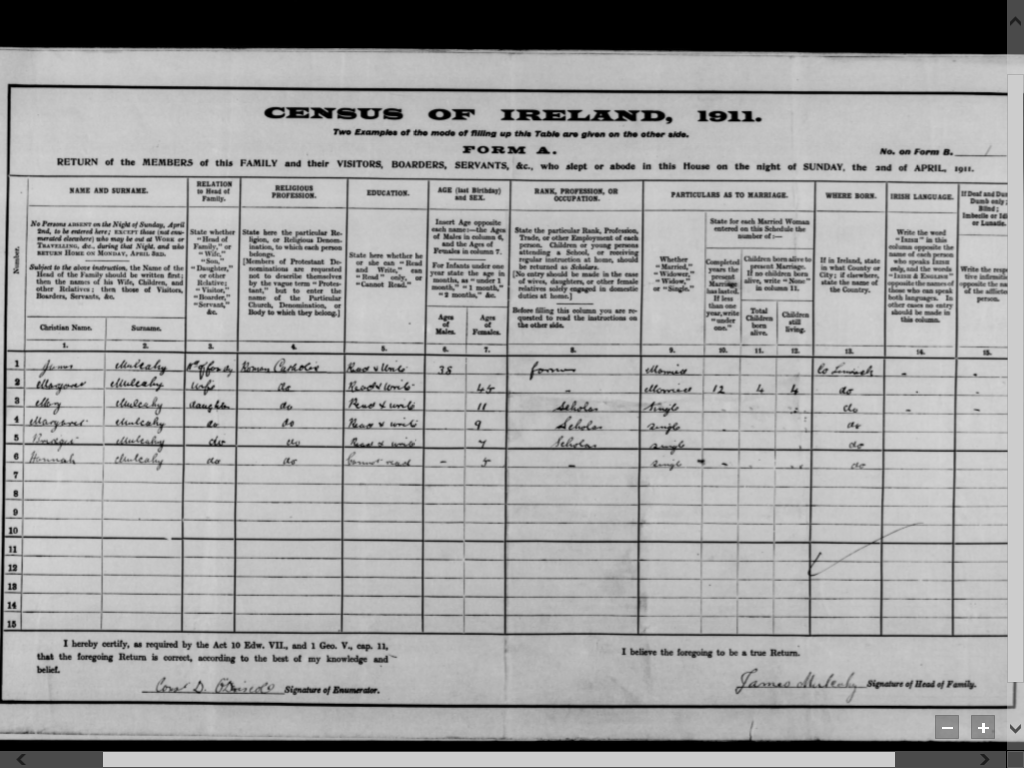

When James and Margaret died, the farm passed to their daughters. However, when the daughters died, the land and farmhouse were left to a neighbor who had cared for them in their later years.
Both Bridget and Peg were buried in the grave of Thomas Fitzgerald at St. David’s Graveyard in Newcastle West, County Limerick.