
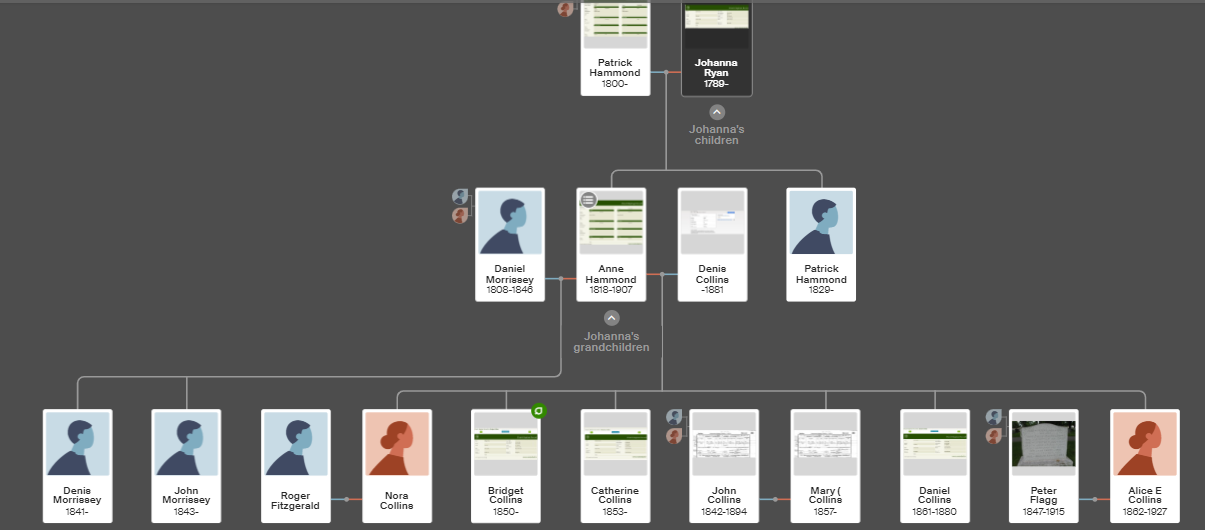
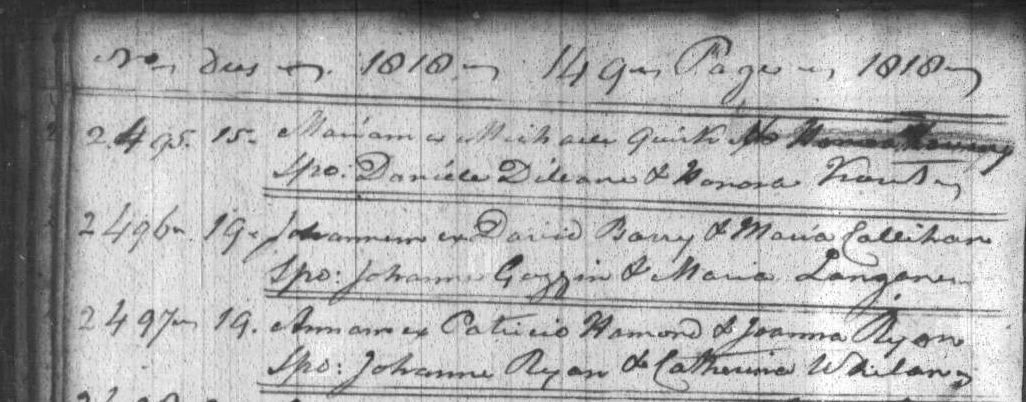
Anne Hammond was born in 1818 to Patrick Hammond of Hospital, County Limerick and Johanna Ryan of Bruff, County Limerick. She was baptised in the parish of Bruff on 19 August 1818. Her sponsors were John Ryan and Catherine W???.
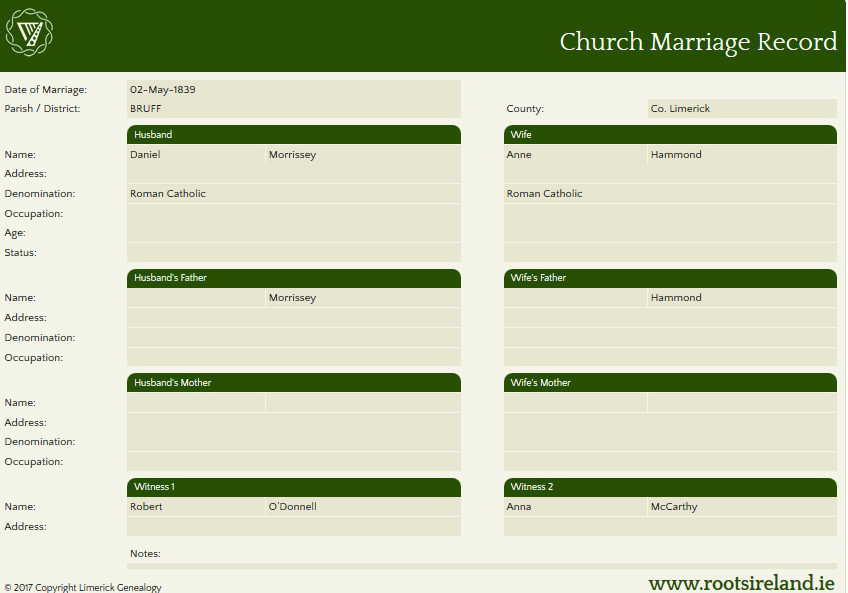
At the age of 21, she married Daniel Morrissey, ten years her senior, of Cappanihane on May 2, 1839, in the parish of Bruff. The witnesses to their marriage were Robert O’Donnell and Anne McCarthy.
What was happening in Ireland in the early 1820’s?
Agrarian Unrest: The early 19th century in Ireland was marked by agrarian unrest, with tensions between tenant farmers and landlords often leading to violence and upheaval. This period saw the continuation of agrarian secret societies such as the Whiteboys, who were active in County Limerick and other rural areas. These secret societies often sought to address grievances related to land tenure, rents, and living conditions through acts of intimidation and sabotage.
Tithe War: One of the major sources of discontent in rural Ireland during this time was the system of tithes, which required Catholic tenants to pay a portion of their agricultural produce to the Protestant Church of Ireland clergy. Many tenant farmers struggled to make ends meet, leading to increased resentment towards landlords and the British authorities and their agents.
Daniel O’Connell: The early 1820s also saw developments in Irish politics, including the emergence of Daniel O’Connell as a prominent leader of the Catholic emancipation movement. O’Connell’s efforts to secure political rights for Catholics, including the repeal of the Penal Laws and the removal of religious restrictions, garnered significant support among the Irish population, including in County Limerick.
Captain Rock: Captain Rock was a pseudonym used by individuals or groups involved in agrarian violence, mainly in southwestern Ireland. These disturbances involved violence, attacks on landlords, property destruction, and intimidation of land agents, driven by grievances over landownership and poor living conditions. Captain Rock symbolized resistance against the landlord system and rural oppression, representing collective resistance rather than a single individual.
The Murder of Dennis Morrissey 1922
At the young age of 14, Daniel Morrissey witnessed the murder of his father, Dennis Morrissey, on February 22, 1922, outside his own front door. The story of his murder and the execution of the perpetrators is recounted in the following newspaper clippings of the time.
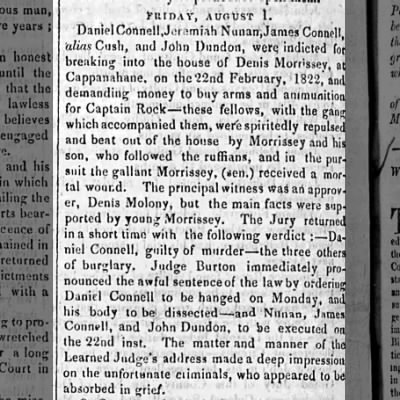
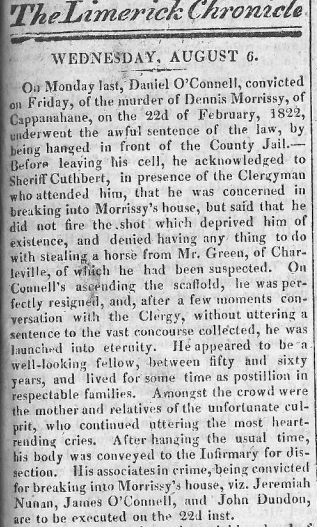
Connaught Journal published Galway, Ireland – Monday, September 1, 1823
PROVINCIAL INTELLIGENCE LIMERICK
August 23.- At two o’clock yesterday, James CONNELL and John DUNDON, were hanged in front of the County Gaol, for attacking the house of Dennis MORRISSY, a farmer, at Cappanahane, when MORRISSY, after making a spirited resistance, was murdered by Daniel CONNELL, their companion, and for which he was executed a few weeks ago. The unfortunate culprits ascended the platform with a degree of firmness, but with the most apparent penitence.
Whilst the ropes were adjusting, they emphatically said that they were guilty of the crime for which they were justly to suffer, forgave their persecutors, and trusted through the mercy of Christ for pardon. They were then launched into eternity. Both the malefactors who were in the prime of life, uncommonly stout, and well looking, were for a length of time much convulsed, DUNDON in particular.
After hanging the usual time, their bodies were cut down, and given to their friends, which was one of the last requests made by the unfortunate culprits. A few moments before CONNELL & DUNDON ascended the platform, Daniel NUNAN, their companion in guilt, and who was also to be hanged yesterday, received a reprieve, which was announced to him by Sheriff CUTHBERT in the condemned cell. The pleasing intelligence was quite unexpected, so much so, that his coffin was prepared to receive the body, and the announcement of it made a deep impression on the wretch, who wept bitterly, and said, that if it was only a reprieve to stay the execution, he was better pleased to suffer that day, as he was perfectly resigned to meet his Divine Master.
The Magistrates acting for the Western Division of Upper Donnelloe, who usually meet at Newcastle, deeming it of public importance to that remote part of their district, held a Sessions on Monday last at Abbeyfeale, according to notice published some weeks before. After disposing of several cases of hire, trespass, &c. charges were brought before them, against persons retailing spirits without license, upon which subject they gave some wholesome advice to the assembled inhabitants of the town and vicinity. They then entered on a minute investigation of the conduct of Sub-Constable John HALTON, upon charges preferred by the principal persons residing in the town. The inquiry occupied the Court till a late hour, several witnesses having been examined, and the whole of their evidence having been taken down.
The Court then adjourned to Monday, the 8th of September next, when a Petty Sessions will be again held in Abbeyfeale.
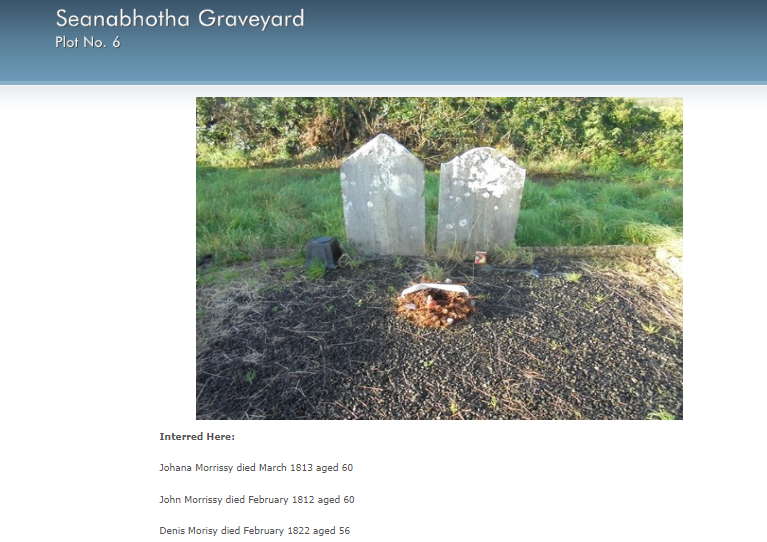
Denis Morrissey is buried beside his brother John, died 1912, in Plot No. 6 in Seanabhotha Graveyard, Granagh, Ballinleena, Co. Limerick. Also buried there is Johana Morrissey died 1913 – I am not sure of the relationship.
Daniel Morrissey and Anne Hammond had two sons, Denis, born in 1841 and John, born in 1843. I have not been able to find out anything about them.
Lands and Tenancies at Cappanihane
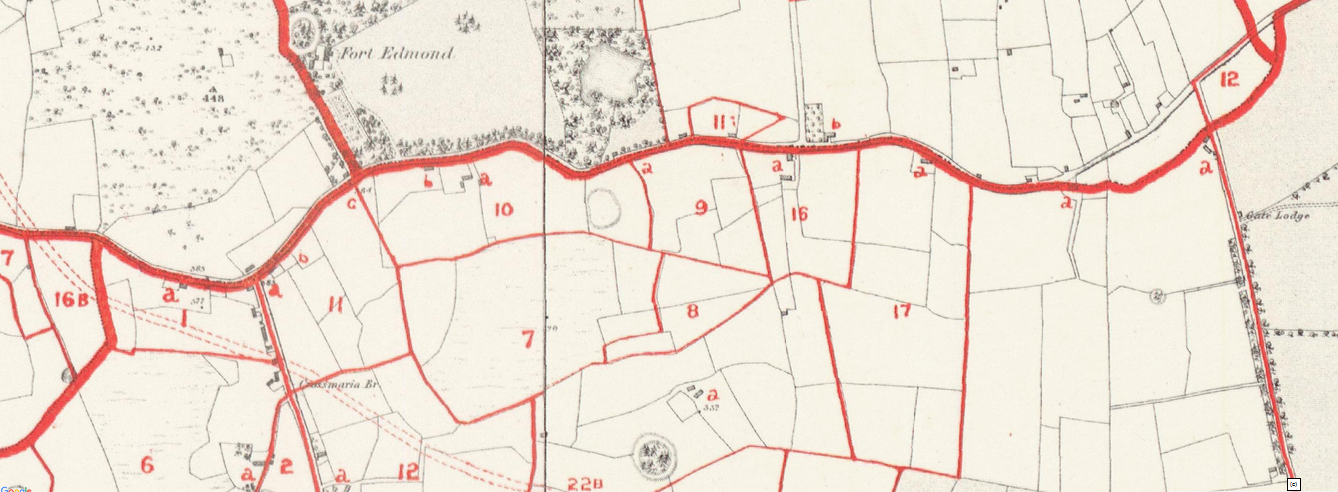
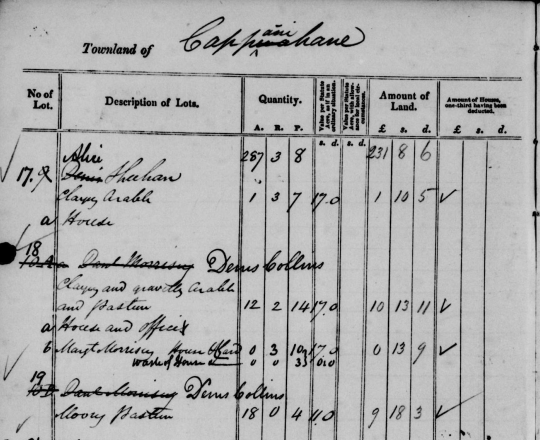
On page 132 of the Records of Encumbered Estates, lands at auction dated 20 January 1854. This includes Lisduane and Cappanihane. “In the matter of the estate John Mason, Walker Jackson Mason, and Miles Jackson Mason. The lands of Lisduane are with others held under a fee-farm grant bearing date June 22, 1592. The lands of Cappanihane are held in fee-simple being portion of the lands granted by patent of 36 Charles II to Brook Bridges.” The land was sold in three lots. Lisduane lots 1,2,3 only had John Mason, David Bennett and Edmond Cagney. Lot 4 was listed as Cappanihane, and had 31 tenants listed, including James Gorman (05-01-35) and John Gorman (18-03-00 and 04-03-20). (Acres etc.)
In the encumbered estate auction in Cappanahane were Myles Mason, Esqr, Thomas Cagney, John Fitzgibbon, Denis Collins, Connor O’Brien, Widow Hartigan, Connor Tuohill, Patrick Clifford, Thomas Divane, Patrick Grew, James Gorman, John Cagney, Michael Lynch, Michael Tuohill, Patrick McDonagh, John Gorman, late John Ahern (now Thomas Maher), Jeremiah Noonan, Edmond Heffernan, Patrick Clifford, Joan Malone (widow), Ellen Noonan, James Morrissy, Daniel Burns, William Lee, Richard Dundon, Jeremiah Clifford, Patrick Condons, Miss Mason, Daniel Guerrin, Patrick Lynch, John O’Brien. Reference is made to the presence of a police barracks.
Denis Collins married Anne Morrissey (Anne Hammond Morrissey?) sometime between 1843 and 1850.
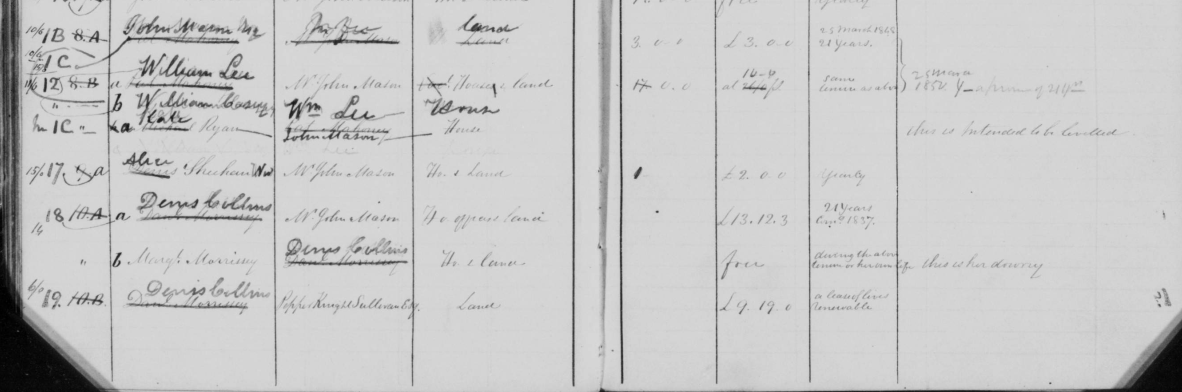
Children of Denis Collins and Anne Hammond Morrissey
- 1850 Dec 3 Bridget Collins
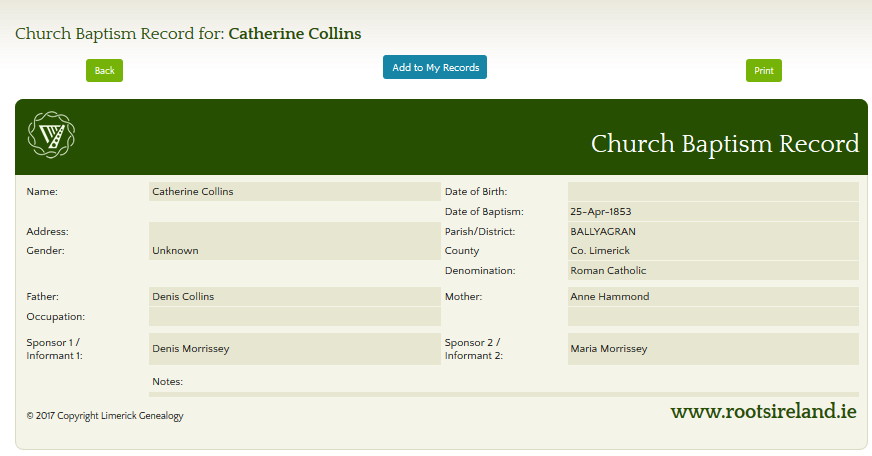
- 1853 – Catherine Collins was baptised in Ballyagran parish on April 25, 1853. His sponsors were Denis Morrissey and Maria Morrissey. I am taking this Denis Morrissey to be Anne’s dead husband’s nephew in the absence of finding another Denis Morrissey old enough to be a sponsor. I don’t know if Maria is Denis’s wife or not because of the practice of using maiden names in records at the time.
- 1857 – Mary Collins
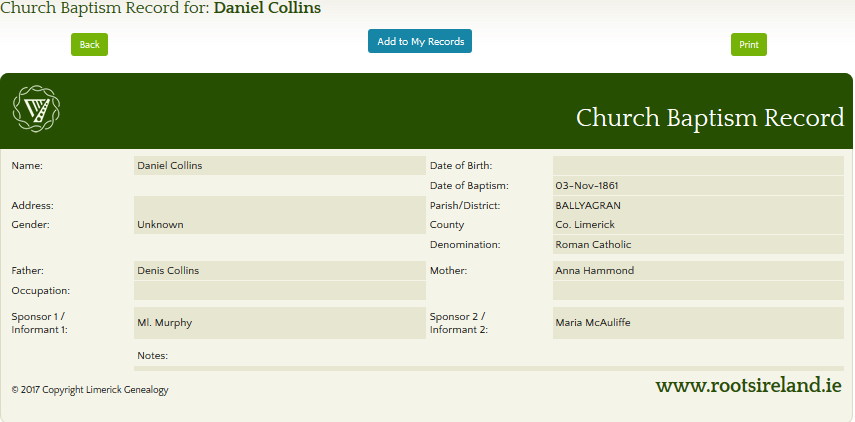
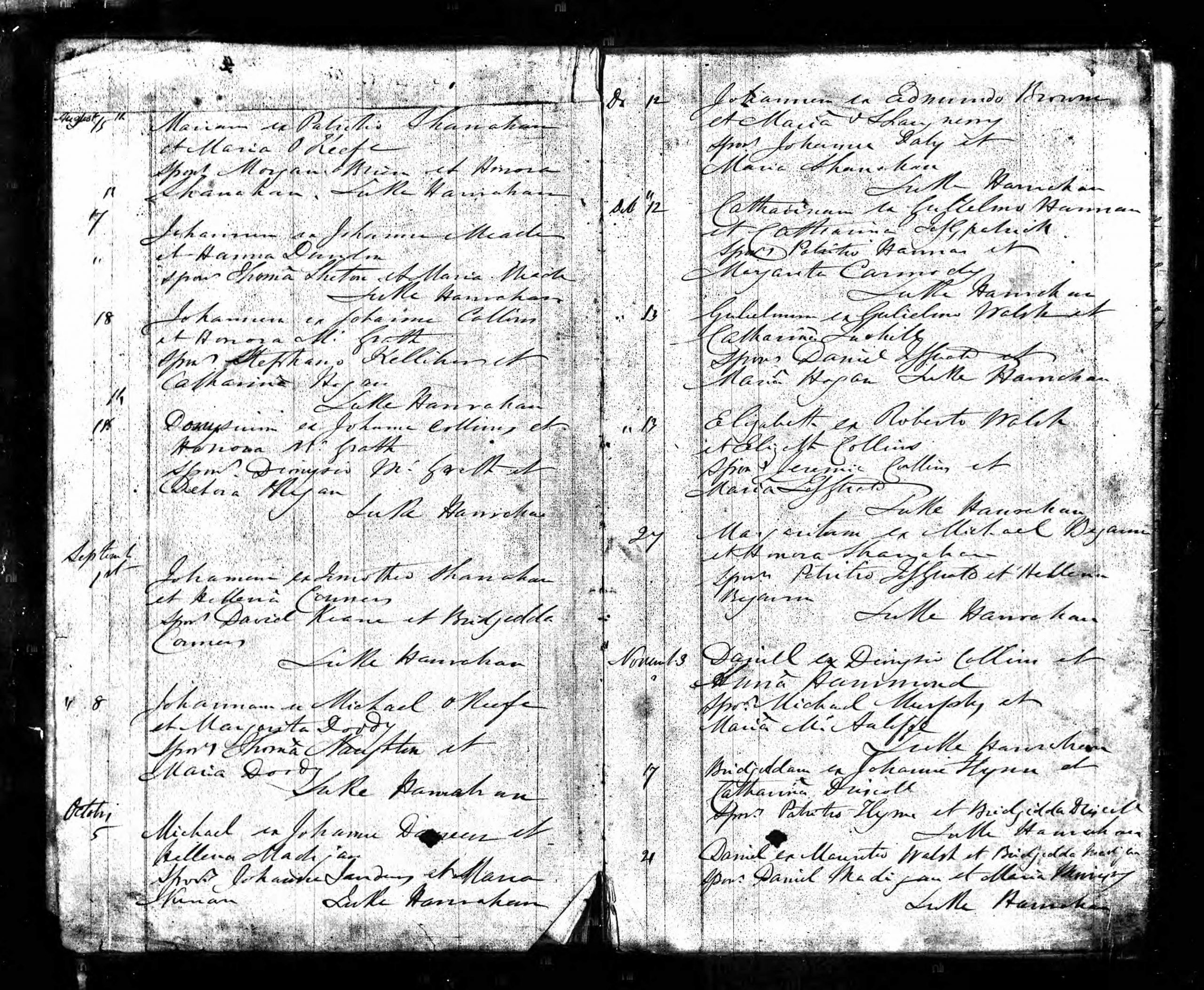
- 1861 – Daniel Collins was baptized on November 3 by Father Hanrahan in Ballyagran parish. Baptism sponsors were Michael Murphy and Maria McAuliffe I have Daniel’s death on my ancestry tree as March 3, 1880, in Cappanihane. I don’t have a record of where I got that information. If it were true, he would have been only 19 at the time of his death.
- 1862 – Alice Collins was born in May. She married Peter Flagg and died in Worcester, Massachusetts, in 1927. More to come on Alice’s own page here.
- I just discovered in Alice’s obituary that when she died, there was another surviving sister called Nora Collins, who was married to Roger Fitzgerald. Again to be investigated further.